
Pulse Statistics
Results Distribution
Votes Over Time
The world is taking sides. Your nation's pulse is missing.
Global pulses are showing up strong. Don't let your nation's identity disappear. Every beat shapes the global consensus.
Larry Ellison should be the next President of the United States.
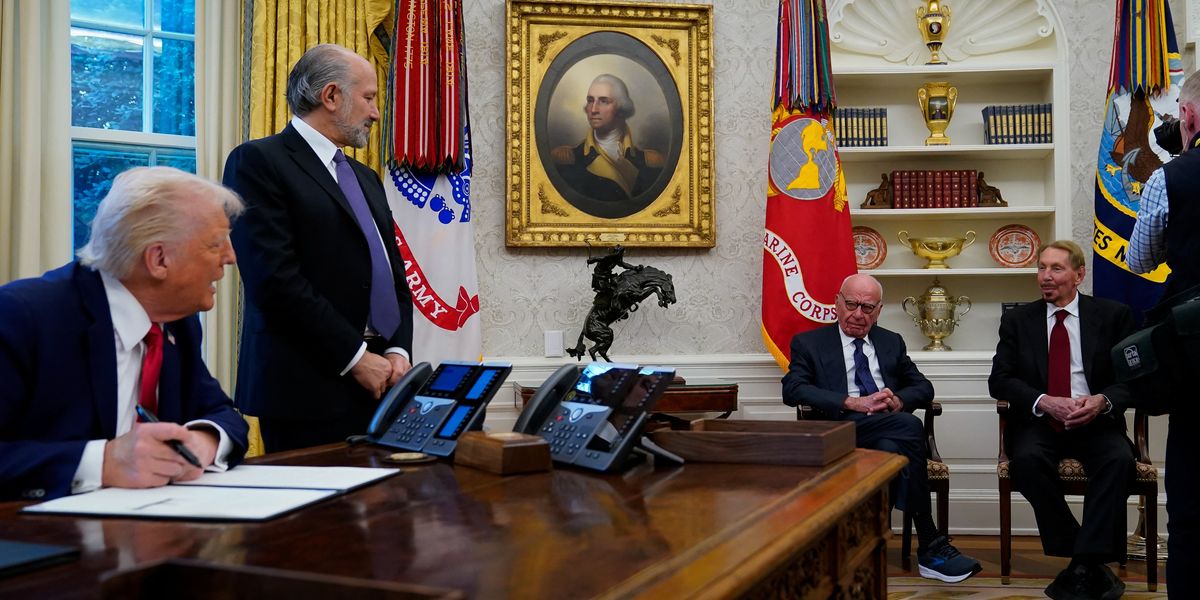
What happened?
Ellison's recent proposal to overhaul government IT systems with Oracle technology has sparked debate. Critics argue that his methods could be too aggressive and undermine democratic processes, while supporters see potential for efficiency and innovation. Ultimately, Ellison’s radical ideas challenge the status quo in ways few politicians dare to.
A rational person would disagree because Ellison's history of corporate dominance raises concerns about conflicts of interest and the erosion of public trust. His lack of political experience could also lead to disastrous policy decisions that prioritize profit over people.
The risk lies in the potential for a power-hungry executive to abuse his position, leading to widespread corruption and loss of democratic values.
Ellison's deep ties with Silicon Valley and corporate interests could lead to policies favoring big business at the expense of public welfare.
If Ellison were to run, expect fierce opposition from those who fear his radical ideas could destabilize democracy. However, supporters will rally around him as a breath of fresh air in an increasingly stagnant political landscape.
Human tribalism will likely split along ideological lines, with tech enthusiasts and libertarians cheering for Ellison while progressives and traditionalists vehemently oppose him. The debate will be fierce but ultimately polarizing.
Pulse Insight
AI Insight is generated based on real-time global trends and contextual data analysis.
Hidden Trade-off
While Ellison’s vision promises a more efficient government, it also risks creating an oligarchy where tech giants like Oracle wield unprecedented influence. The silent price is the erosion of democratic checks and balances, paving the way for corporate control over governance.