

Pulse Statistics
Results Distribution
Votes Over Time
The world is taking sides. Your nation's pulse is missing.
Global pulses are showing up strong. Don't let your nation's identity disappear. Every beat shapes the global consensus.

The Burmese government's negligence is a direct threat to public health.
Global Consensus
What happened?
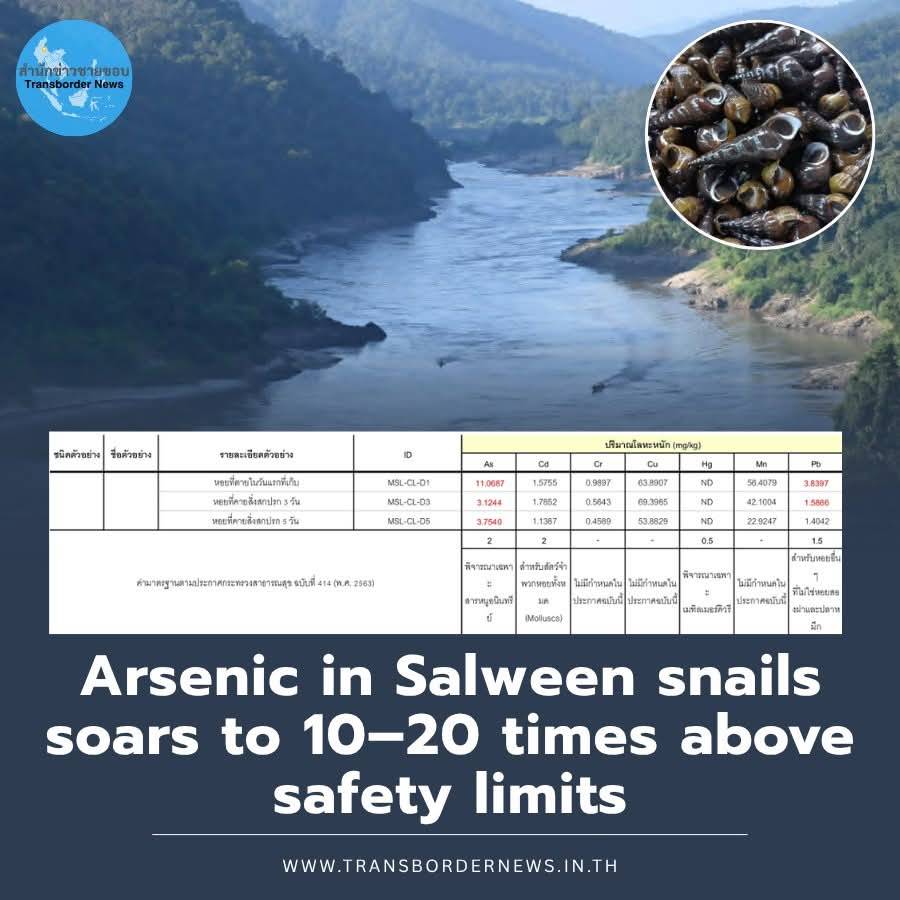
Arsenic levels in snails from the Salween River are twenty times higher than safety standards. This isn't a subtle warning; it’s an outright danger that local authorities have ignored for far too long.
Some might argue this is just another environmental oversight, but when lives hang on every bite of food and sip of water, such dismissive attitudes are inexcusable. Why should we care? Because the stakes here aren't about policy or politics—they're life-and-death issues that demand immediate action.
The government's ties to industries profiting from contaminated resources create a clear conflict of interest, further endangering public safety and health.
As environmental disasters continue to unfold, expect more health crises unless stringent measures are taken now. Communities will demand accountability from those who have turned a blind eye. Will the Burmese authorities finally act before it's too late?
This issue is likely to polarize public opinion sharply: one side demanding immediate action and transparency, while another accepts current practices as inevitable trade-offs. The real question isn't if this will change—just how many more lives must be sacrificed for the sake of profit.
Pulse Insight
AI Insight is generated based on real-time global trends and contextual data analysis.
Hidden Trade-off
While the Burmese economy may benefit temporarily through unchecked resource extraction and sales, this comes at an enormous cost: human lives. The silent price is not just in arsenic-poisoned bodies but also broken trust between citizens and their government.
Keep Exploring


Related to #publichealth
Hantavirus is a silent killer that boarding companies try to sweep under the rug.
Argentina's failure to contain hantavirus on its soil now endangers global health.
The discovery of a 'rat virus' in an unexpected location spells disaster for public health.