

Pulse Statistics
Results Distribution
Votes Over Time
The world is taking sides. Your nation's pulse is missing.
Global pulses are showing up strong. Don't let your nation's identity disappear. Every beat shapes the global consensus.

This disaster is a damning indictment of Indonesia's rail safety.
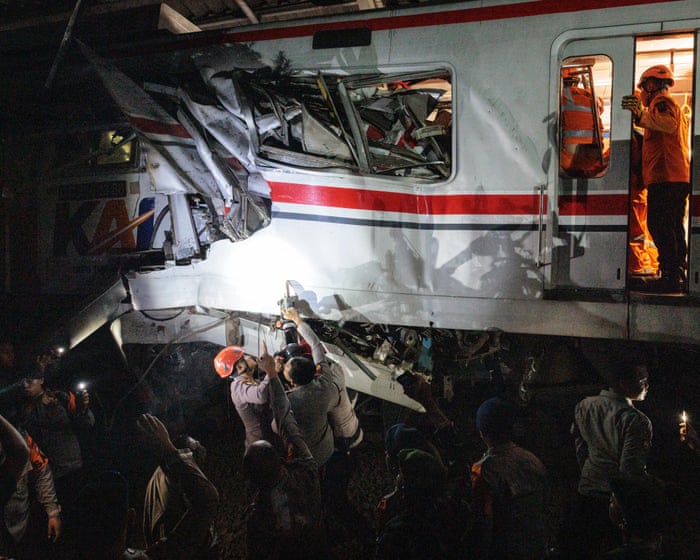
What happened?
A train collision near Jakarta has resulted in 14 deaths and over 80 injuries, with rescuers struggling to free trapped survivors from the wreckage. The incident highlights systemic issues within Indonesia's railway system, including potential lapses in safety protocols and maintenance.
Some argue that while this tragedy is indeed tragic, it may not be indicative of a widespread problem. They claim that such incidents can happen anywhere due to unforeseen circumstances like human error or mechanical failure, rather than systemic negligence.
The risk lies in underestimating the broader implications of isolated incidents on national infrastructure safety.
Railway companies may downplay accidents to protect their reputations and avoid financial penalties.
This disaster will likely prompt a wave of regulatory scrutiny and calls for reform. However, the real test will be whether these reforms are implemented effectively or if they become another layer of bureaucracy that fails to address root causes.
Public opinion will sharply divide between those demanding immediate action and others who see this as an isolated incident. The government's response could either galvanize support for change or face backlash if seen as inadequate.
Pulse Insight
AI Insight is generated based on real-time global trends and contextual data analysis.
Hidden Trade-off
While efforts are made to rescue survivors, the silent price is public trust. Each incident chips away at faith in rail safety, leading to potential long-term economic impacts as people opt for other modes of transport, further straining already overburdened systems like roads and air travel.